

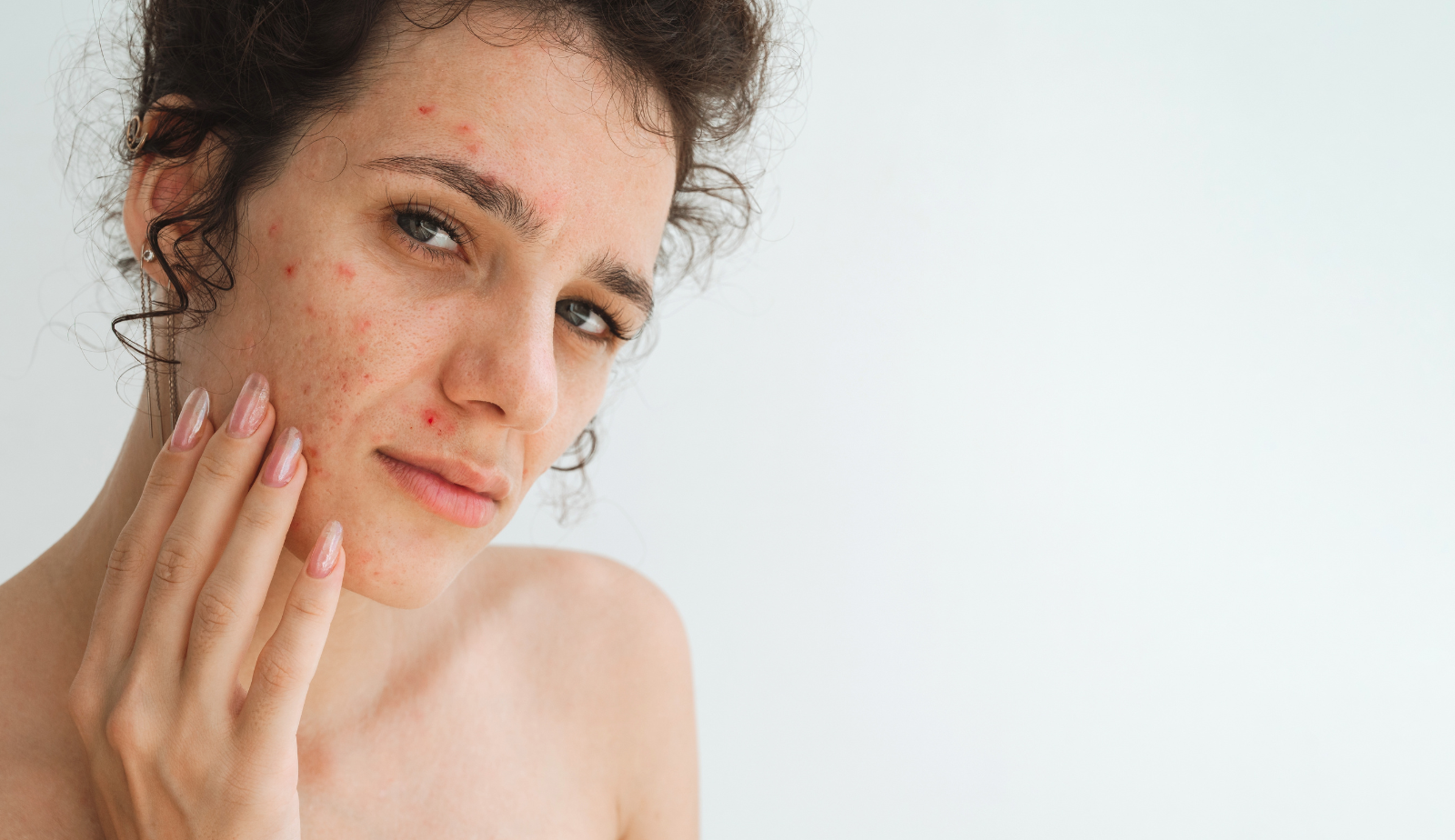

Another acne post. I know, I know—you’ve read a million of them. If you’ve ever been on an acne journey, you know the drill: you devour every article, every Reddit thread, every TikTok from that one girl with perfect skin who swears by a $9 cleanser. You try the products, you wear your SPF, and somehow you end up worse than when you started.
Let me tell you about Jane.
Jane, like many of us, started her acne journey the way we all do: straight to TikTok. She tried every product every influencer suggested. She researched every Reddit board until 2 AM, convinced the answer was somewhere in the comments. She was using all the “right” things, wearing SPF like it was her ride-or-die, doing everything the internet told her to do. And yet? Nothing was improving. If anything, things were getting worse.
Jane’s family members started offering unsolicited advice at Sunday dinner and now her hair was falling out, her skin was so sensitive that water stung, and she was ready to throw in the towel and call her derm about Accutane. At her wits’ end, she booked with a holistic aesthetician, mentally preparing herself for the same tired advice: “Have you tried benzoyl peroxide?” “Just don’t touch your face!” “You need facials every week for the rest of your life.” But that’s not what happened at all.
Instead, Jane discovered that a series of lifestyle factors and product mishaps—not her lack of effort—were behind everything she was experiencing. Sleep Is Your BFF (And No, Scrolling in Bed Doesn’t Count) Here’s something no influencer post ever told Jane: sleep quality is paramount to skin health. Research shows that sleep disturbances are highly prevalent in people with acne—in one study, over 65% of acne patients had significant sleep issues, and the severity of their acne directly correlated with how poorly they slept. Another comprehensive review found that poor sleep doesn’t just make you tired; it actively exacerbates inflammatory skin conditions like acne. When you’re not sleeping, your cortisol spikes, your hormones go haywire, and your skin pays the price. Jane was running on fumes and wondering why her face looked like it hadn’t rested in years.
Your Hormones and Stress Play a Bigger Role Than You Think
The stress of no sleep that had her running on fumes was also recking havoc with her hormones. Jane’s period was getting heavier and her estrogen was creeping up. This was leading to more and more inflammed, raging pimples which she felt she had no control over.
Re-Evaluate Your Hygiene Habits
Jane was working out consistently—good for her! Except she’d grab a smoothie post-gym, run errands, and shower hours later. Big mistake. When you exercise, sweat mixes with bacteria and oil, creating a breeding ground for breakouts. Research confirms that sweating can exacerbate acne, and showering promptly after working out is essential for acne-prone skin. And hot showers? Jane loved a scalding rinse after a hard workout. But high temperatures can strip the skin barrier, leaving it vulnerable and reactive. We set her up with a hypochlorous acid spray to spritz post-workout—it kills bacteria without stripping—and talked about why picking at her skin was making everything worse. Popping a pimple doesn’t just traumatize the spot; it pushes bacteria and pus deeper into the skin, spreads inflammation, and leads to more breakouts and scarring. Jane was essentially seeding new pimples while trying to eliminate old ones. Sometimes
Less Is More
Jane was using all the “right” products: benzoyl peroxide cream, vitamin C serum, retinol, and salicylic acid, all in the same routine, all trying to tackle her acne and post-inflammatory erythema. Here’s the thing: certain ingredient combinations are like putting two toxic exes in the same room. Retinol and BHA (salicylic acid) together can overwhelm the skin, leading to increased sensitivity, redness, and flakiness. And vitamin C with benzoyl peroxide? Benzoyl peroxide can oxidize vitamin C, reducing its effectiveness and causing irritation. Jane’s routine wasn’t helping—it was stripping her barrier to the point where water stung. And when your barrier is compromised, you don’t heal; you just get more acne, more sensitivity, more everything.
Last But Not Least: Be Patient
Jane would try a product for two weeks, see no change, and toss it. Because everyone online told her that’s when she should see results. The truth? For some products, like moisturizers, you might feel a difference immediately. But your skin cycle turns over every 28 days for the average person—that’s the soonest you’ll see real change. And some ingredients take even longer. Retinoids can take up to 12 weeks to complete retinization, which is a fancy way of saying your skin needs a full season to adjust and show you what it’s capable of. Jane was ghosting her products before they even had a chance to show up.
The Happy Ending (Or, The Beginning)
Over the next year, Jane didn’t just clear her skin. She learned how to cut through the marketing noise, how to listen to her body, and how to navigate her skincare so it was benefiting her instead of setting her back. Her journey wasn’t linear—whose is?—but she finally stopped spinning her wheels. This is just the surface of what we explored with Jane. The truth is, acne is rarely just *skin deep*. It’s sleep and stress and hormones and habits and a dozen other things that have nothing to do with whether you used the right cleanser this morning.
P.S. Your acne journey might take longer than a TikTok trend. But so did everything worth having. Working with a Holistic Aesthetician can actually lead you to exactly what you have been hoping for…. clear skin! Get started today!