

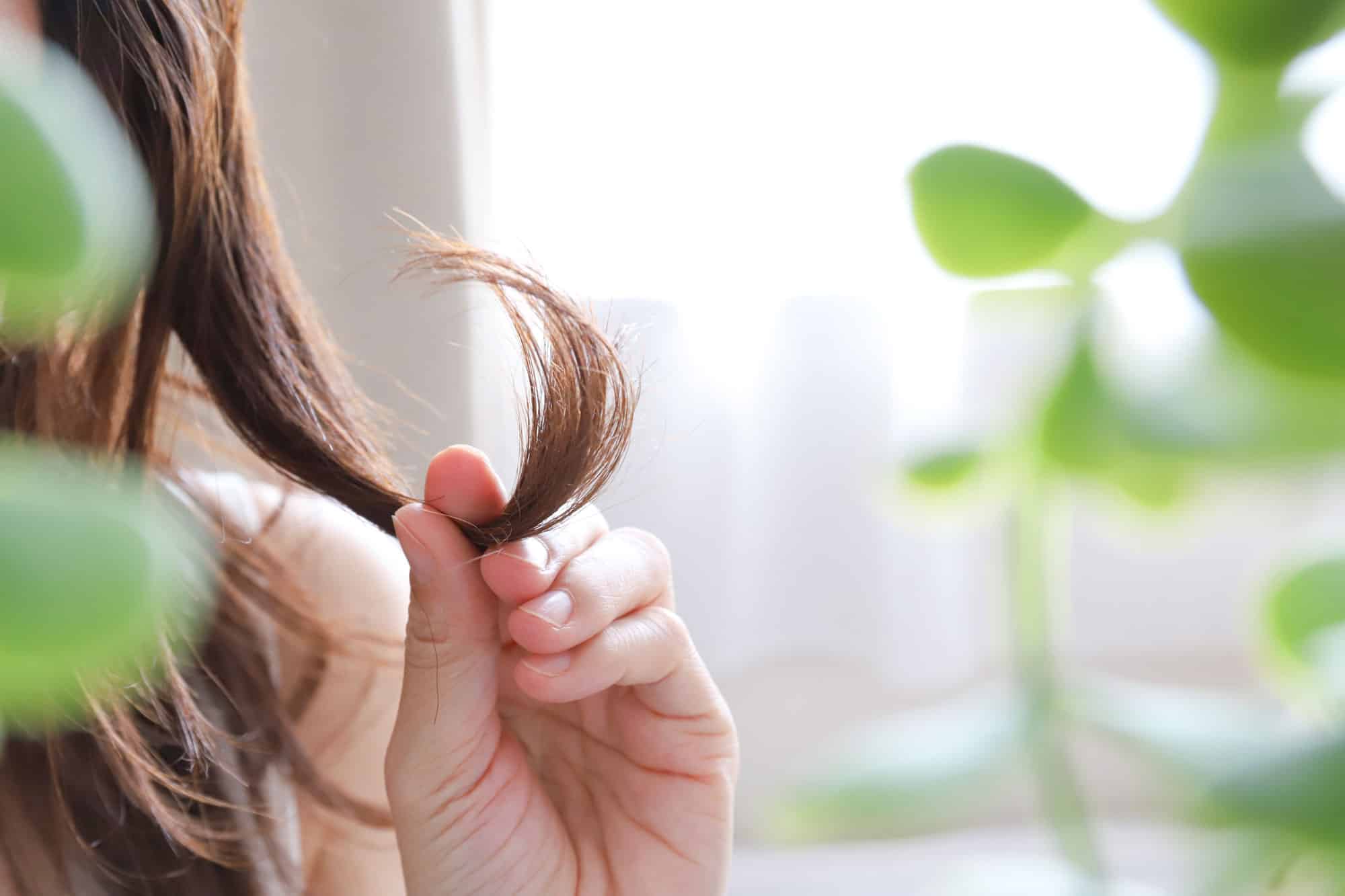

Androgenetic alopecia (AGA), commonly known as male or female pattern baldness, is the most common cause of hair thinning and loss. It affects about 50% of men by age 50 and nearly 40% of women after menopause. AGA is a hereditary condition influenced by dihydrotestosterone (DHT), a potent byproduct of testosterone. In individuals with a genetic predisposition, certain hair follicles, commonly those along the hairline, crown, and top of the scalp, become more sensitive to DHT.
Over time, this sensitivity causes the follicles to shrink, resulting in hair that grows in thinner, shorter, and lighter. DHT is also believed to disrupt the natural hair cycle by shortening the growth phase (anagen) and extending the resting phase (telogen). This shift can lead to increased hair shedding and reduced overall density. In addition to hormonal influences, inflammation in the scalp may also contribute to AGA. Elevated levels of pro-inflammatory cytokines can impair follicle function and create a less supportive environment for healthy hair growth.
Understanding these mechanisms highlights why a comprehensive approach to treatment can be effective in managing AGA. Naturopathic medicine takes a whole-person approach to AGA, allowing Naturopathic Doctors (ND) to support hair health by addressing hormonal imbalances, calming inflammation, and promoting a healthy hair growth cycle. In this article, we break down some of the most popular and evidence-based remedies for addressing AGA naturally.
Rosemary Oil
Rosemary oil has taken over TikTok and Instagram, with countless influencers swearing by it as their go-to remedy for hair regrowth. If you’ve searched ‘hair loss’ on social media, you’ve likely seen it featured in countless before and after videos and DIY routines. Rosemary oil’s rise in popularity is largely tied to a 2015 study by Murata et al., which found that rosemary oil produced comparable improvements in hair count to 2% minoxidil after six months, while reportedly causing fewer side effects. However, this study has faced criticism for several limitations, including its short duration, small sample size, and the use of 2% minoxidil rather than the more commonly used 5% formulation, which is the clinical standard for treating hair loss in men. Despite the criticisms, the study still offers encouraging evidence that rosemary oil may be a safe and effective option for supporting hair growth, particularly for those seeking natural alternatives. Additional support comes from a 2002 animal study by Prager et al., which demonstrated the effect of rosemary oil in inhibiting 5-alpha-reductase, the enzyme responsible for converting testosterone to DHT. This study found that the inhibition of 5-alpha-reductase was comparable to the finasteride, the clinical standard for treating AGA. Rosemary oil’s use is further supported by additional clinical and traditional evidence pointing to its anti-inflammatory, circulation-boosting, and follicle-stimulating properties.
Takeaway: Rosemary oil has potential to be effective and is safe in addressing AGA. Rosemary oil may be more effective in prevention and earlier stages of AGA.
Saw Palmetto
Saw palmetto is a well-known herb, most often recognized for its role in managing benign prostatic hyperplasia (BPH). But did you know it may also support hair growth in AGA? That’s because saw palmetto works in both conditions by inhibiting 5-alpha-reductase, the enzyme responsible for converting testosterone into DHT, a key driver behind both prostate enlargement and hair follicle shrinking. The inhibitory effects of saw palmetto extract on 5-alpha-reductase have been observed in multiple studies. However, results across the research are somewhat inconsistent, while some studies report limited or statistically insignificant effects, others show promising outcomes. Researchers who support its use often point out that these discrepancies may stem from variations in extract type, formulation, and potency, which can significantly influence efficacy and study outcomes. In the specific context of AGA, a 2023 randomized controlled trial by Sundeep et al. demonstrated the effectiveness of both topical and oral saw palmetto extracts compared to placebo. The study found a significant increase in hair density in both treatment groups, while the oral group also showed a reduction in serum DHT levels. Although this study did not observe an improvement in the anagen-to-telogen ratio, an important marker of hair growth, a 2020 systematic review by Evron et al. found additional evidence from several studies reporting a significant increase in this ratio.
When compared to finasteride, studies have shown that finasteride is generally more effective in treating AGA. However, saw palmetto is often favoured for its more favourable side effect profile. While finasteride is well known for its potential to cause side effects such as reduced libido, some supporters of saw palmetto highlight that it may actually have libido-supporting properties, making it a potentially appealing alternative for those concerned about hormonal side effects.
Takeaway: Saw palmetto shows strong potential in the treatment of AGA, offering a lower side effect profile compared to the pharmaceutical standard, finasteride. Its effectiveness, however, appears to depend on type of extract, delivery method, and potency. This variability highlights the importance of selecting a high-quality, clinically supported supplement that has demonstrated efficacy in treating AGA.
Pumpkin Seed Oil
Much like the previous two natural approaches to AGA, pumpkin seed oil is thought to support hair growth through the reduction of DHT. A 2014 randomized controlled trial by Cho et al. found that oral pumpkin seed extract supplementation significantly improved both self-reported hair satisfaction and measured hair count at 12 and 24 weeks compared to placebo. More recently, a 2021 study by Ibrahim et al. reported that topical pumpkin seed oil had comparable results to 5% minoxidil in reducing hair shaft diversity, a marker of improved hair quality, in women with AGA. In animal studies, pumpkin seed oil has been shown to inhibit 5-alpha-reductase and reduce testosterone’s suppressive effects on the anagen phase of the hair cycle. As with rosemary oil, the evidence for pumpkin seed oil is limited by small sample sizes and a lack of robust human clinical trials. In light of this, pumpkin seed oil remains a safe and potentially effective option in the management of AGA.
Takeaway: Similarly to rosemary oil, pumpkin seed oil has potential to be effective and is safe in addressing AGA. Pumpkin seed oil may be more effective in prevention and earlier stages of AGA.
Caffeine Extract
Caffeine extract has demonstrated effectiveness as a topical treatment for AGA. A 2017 study by Dhurat et al. involving 210 men found that a topical caffeine solution was comparable to 5% minoxidil in increasing the anagen-to-telogen ratio, an important indicator of hair growth activity. Building on this, a 2020 review by Völker et al. analyzed all available studies on topical caffeine extract and concluded that it can promote the anagen phase, enhance hair shaft elongation, stimulate growth activators, and inhibit growth suppressors within the hair follicle. Caffeine extract has demonstrated these benefits while remaining safe and well tolerated for topical use. The review also suggested that caffeine may be even more effective when used in combination with conventional treatments, such as minoxidil. Additionally, compared to the previously mentioned approaches to AGA, the available research on caffeine extract shows a more consistent and positive consensus regarding its effectiveness.
Takeaway: Although more research is required, topical caffeine extract currently has a mostly positive consensus for its use in AGA. Topical caffeine extract is safe and well tolerated.
Melatonin
Topical melatonin has shown promising results in the treatment of AGA across multiple clinical studies. Known primarily for its role in regulating sleep, melatonin also acts as a potent antioxidant and hair growth modulator, offering protective effects against oxidative stress, a key factor implicated in hair follicle damage and premature hair loss. By shielding follicles from oxidative damage, melatonin helps preserve their function and structure over time. In addition to its antioxidant properties, melatonin has been shown to prolong the anagen phase of the hair cycle and reduce premature transition into the telogen phase, supporting healthier, longer-lasting hair growth. A 2023 review by Babadjouni et al. evaluated eight clinical studies investigating the topical use of melatonin for AGA. Remarkably, all eight studies reported positive outcomes, with improvements particularly notable in male patients, though female participants also saw benefit in some trials. These findings support melatonin as a safe, well-tolerated, and evidence-based option in the integrative management of AGA. None of the studies reviewed directly compared topical melatonin to conventional treatments like minoxidil or finasteride, so its relative effectiveness remains unknown. More comparative research is needed to determine how melatonin measures up against established therapies for AGA.
Takeaway: Topical melatonin shows promise as a safe treatment for AGA, with multiple studies reporting positive results. However, more research is needed to compare its effectiveness to conventional therapies
To truly support healthy hair growth, the most effective approach is often a personalized combination of the therapies mentioned above and others available. Knowing which remedies to choose, and how to use them safely and effectively, can feel overwhelming. That’s where working with a ND becomes invaluable. An ND can tailor treatment to your unique needs, helping you address the root causes of hair loss while also supporting your overall health, which in turn creates a stronger foundation for long-term hair vitality.
If you’re ready to take the next step in supporting your hair growth, or even in preventing future hair loss, book an appointment with one of our Naturopathic Doctors today. Still exploring your options? We also offer a free 15-minute consultation to help you learn more about how naturopathic care can support your health journey.
References
https://pubmed.ncbi.nlm.nih.gov/21980982/
https://www.sciencedirect.com/science/article/pii/S0306987717310411
https://pmc.ncbi.nlm.nih.gov/articles/PMC7667670/
https://pubmed.ncbi.nlm.nih.gov/25842469/
https://pubmed.ncbi.nlm.nih.gov/12006122/
https://pubmed.ncbi.nlm.nih.gov/20623347/
https://journals.sagepub.com/doi/epdf/10.1177/039463201202500435
https://onlinelibrary.wiley.com/doi/10.1155/2014/549721
https://pubmed.ncbi.nlm.nih.gov/33544448/
https://pmc.ncbi.nlm.nih.gov/articles/PMC11549889/
https://pmc.ncbi.nlm.nih.gov/articles/PMC7706486/
https://pmc.ncbi.nlm.nih.gov/articles/PMC5804833/
https://karger.com/spp/article/33/3/153/296017/Caffeine-and-Its-Pharmacological-Benefits-in-the
https://jddonline.com/articles/melatonin-and-the-human-hair-follicle-S1545961623P0260X